Industries
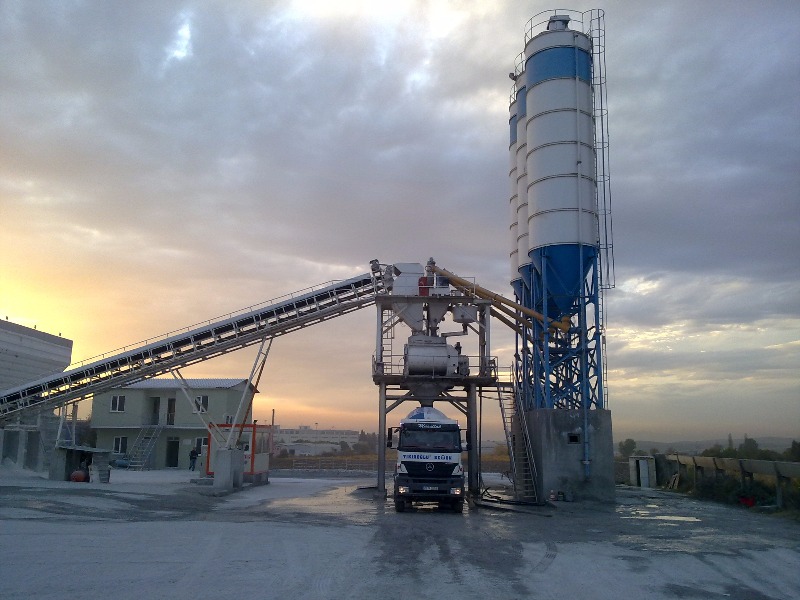
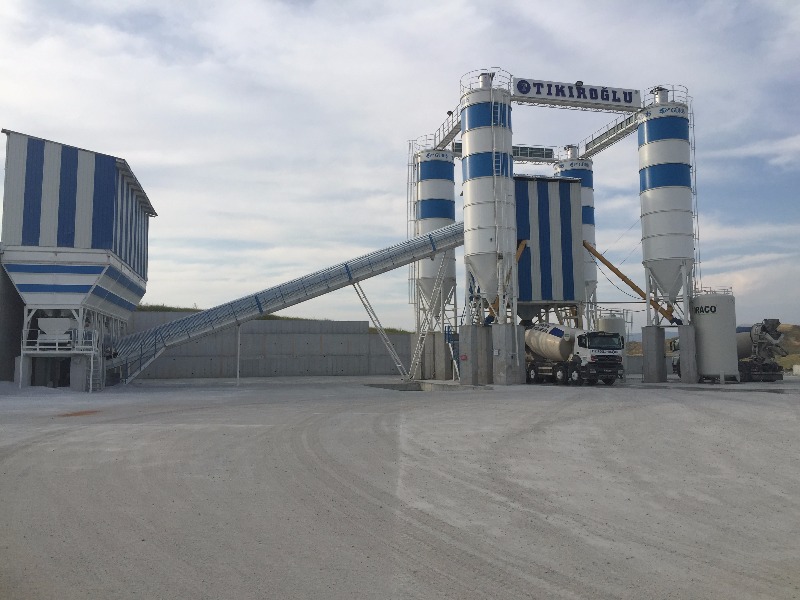
In our ready-mixed concrete facilities, high-strength concretes from C12/14 to C50/55 are produced in accordance with Turkish Standards.
In addition to these products, in our facilities, in order to meet customer needs, products such as Flowable Fill Concretes, High-Performance Concretes, High-Early Strength Concretes, Tunnel Form Concretes, High-Rise Building Concretes, Concrete Types Suitable for Environmental Impact Classes are also produced and customer demands are met.
OUR READY-MIXED CONCRETE VEHICLE PARK:
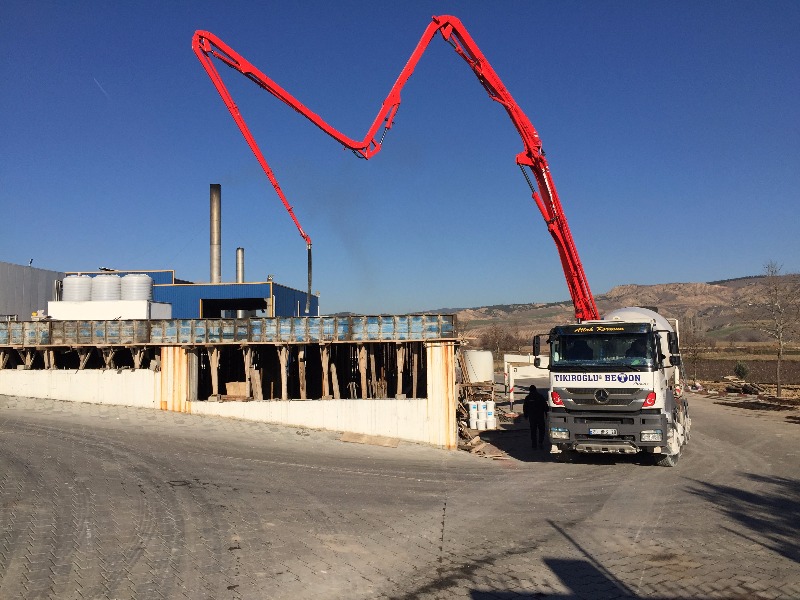
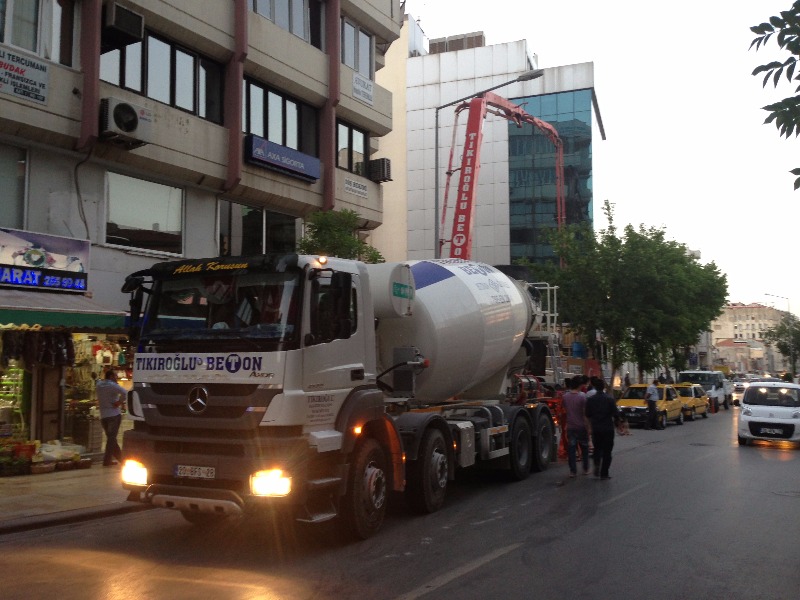
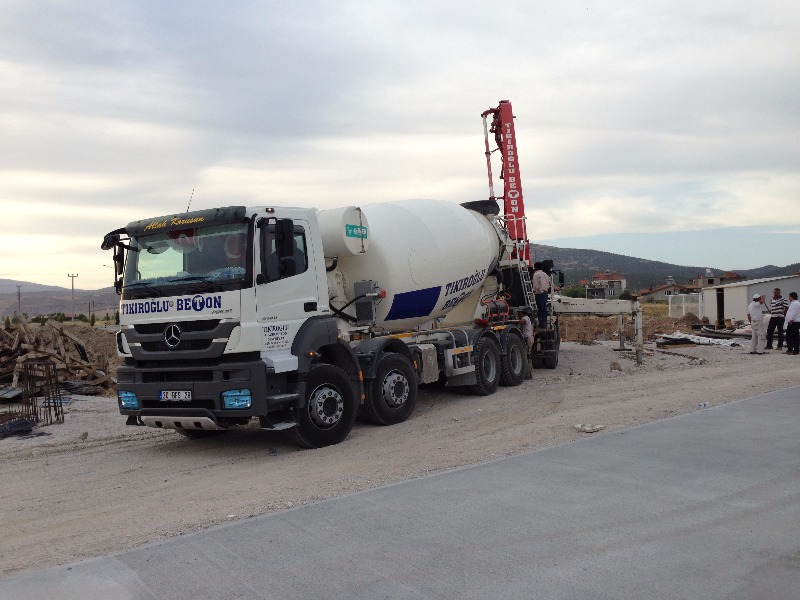
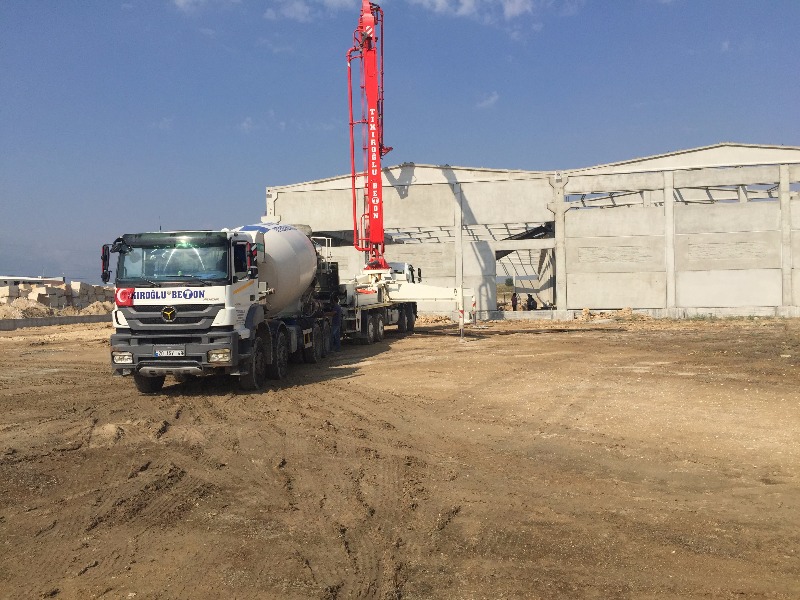
31 Transmixers
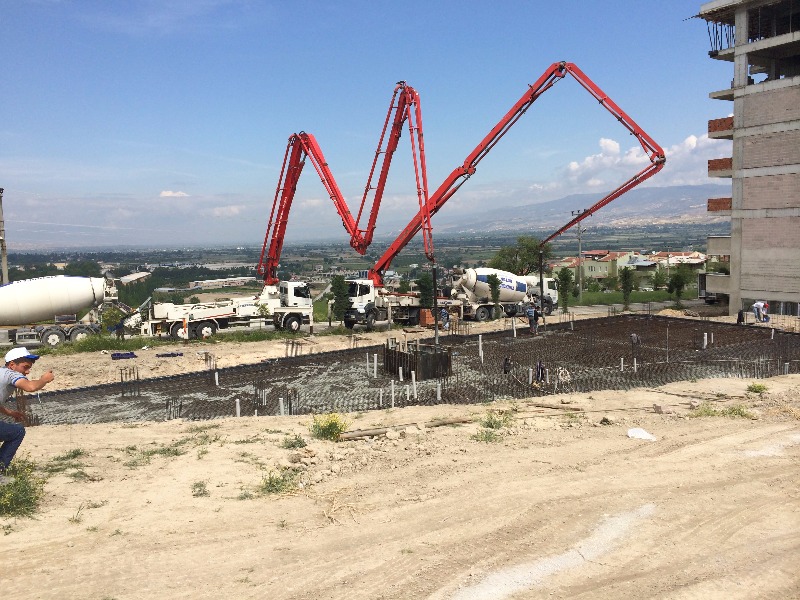
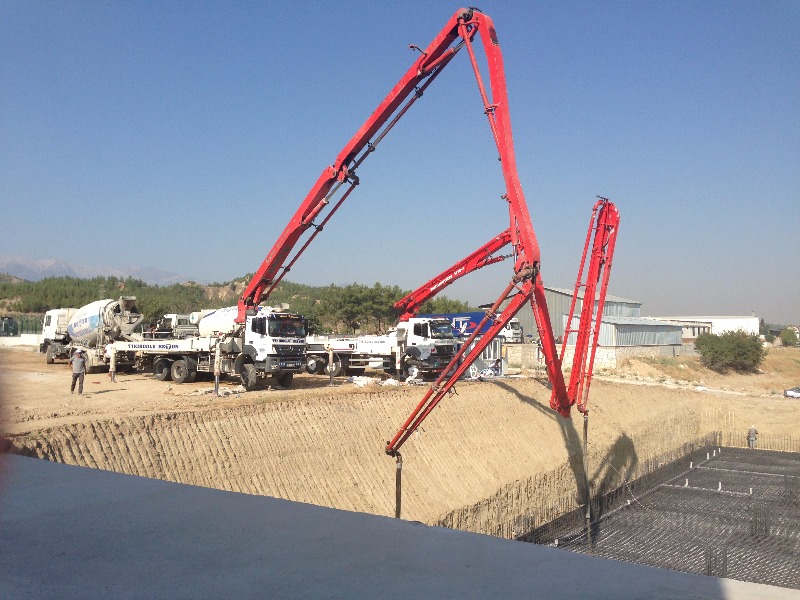
6 Pumps
3 Silobas
Compressive Strength Class of Produced Concrete
GB 250
C12/14
C16/18
C20/25
C25/30
C30/35
C35/40
C40/45
C50/55
SCREED CONCRETE
Our productions are certified with TSE quality certificate. Our company carries out all the tests and controls specified in the standards regarding our raw materials and products during the production phase.
Our facilities have G conformity certificate. Our facilities are periodically inspected by TSE.
CONCRETE CASTING IN HOT WEATHER CONDITIONS
TS 1248
It defines the weather condition when the average air temperature is above 30o C for three consecutive days as “extremely hot weather”.
TS 1247
Concrete casting temperature in normal weather is defined as +5 to +30 o C.
TS EN 206-1
The fresh concrete temperature at the time of delivery (given deviation limits) can be determined between the USER and the MANUFACTURER.
Effects of Hot Weather on Fresh Concrete:
Mixture water increases.
Loss of slump value is greater.
Concrete temperature (hydration) increases.Concrete sets in a shorter time.
Plastic shrinkage (shrinkage) cracks increase.
Air amount is difficult to control in air-entrained concrete.
Effects of Hot Weather on Hardened Concrete:
Strength increases rapidly in the first days, but 28-day strengths are lower.
Since more water is added, a porous and water permeable concrete is obtained.
After the concrete cools down, the tendency of the concrete to crack increases as there will be a temperature difference.
Shrinkage will be higher.
PRECAUTIONS TO BE TAKEN
Using cements with low hydration heat
Cooling the materials forming the concrete
Using additives
Taking precautions to prevent water from evaporating and disappearing
Preventing direct sunlight from coming into contact with the concrete
Cooling the mold and reinforcement before casting
Wrapping the columns with wet sacks
Not delaying curing
Reducing the effect of wind
Using chemical additives that delay setting
Starting the curing process as soon as possible
POURING CONCRETE IN NORMAL WEATHER CONDITIONS
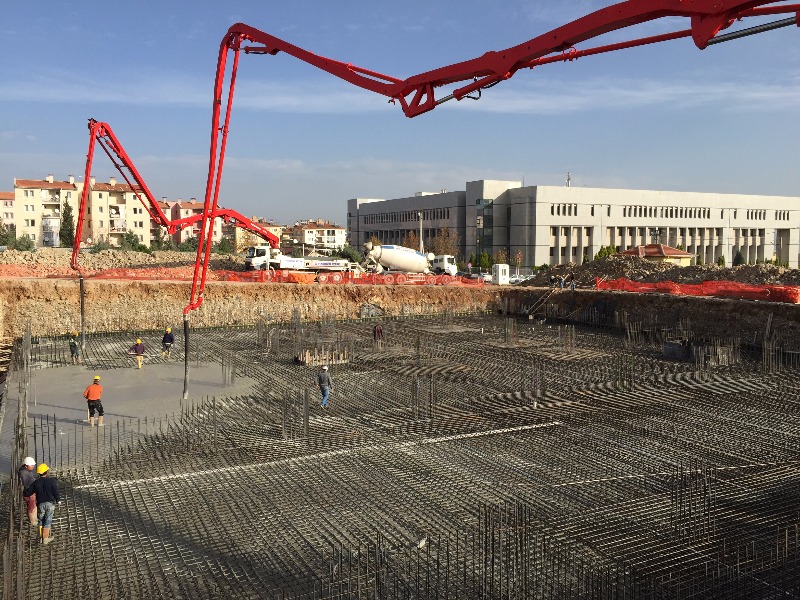
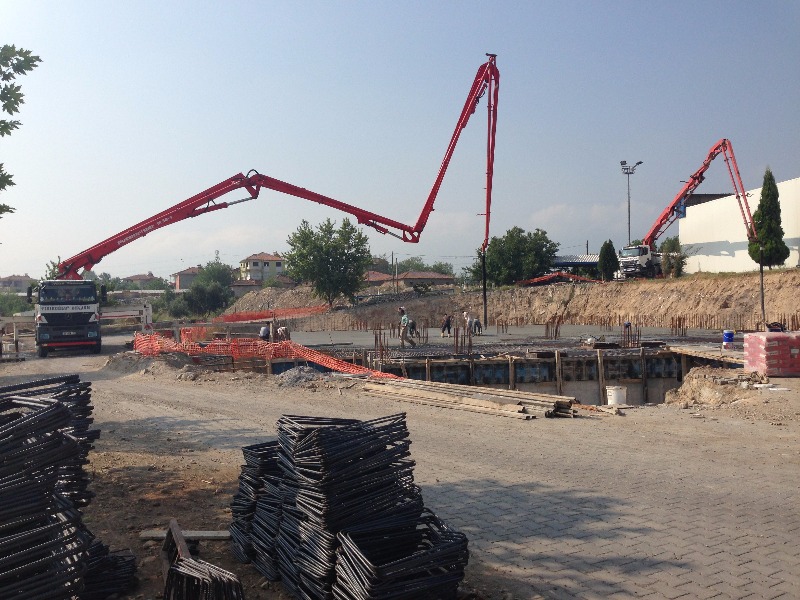
The point where the concrete will be poured should be where it will be placed. It should be avoided to pour the concrete in an area and then transport it to the area where it will be placed by pulling or transferring it. The concrete can spread up to 3 m from the area where it is poured. The concrete to be placed is first piled up in an area, especially in pavement and road concretes, and then tried to be spread. This practice should be avoided.
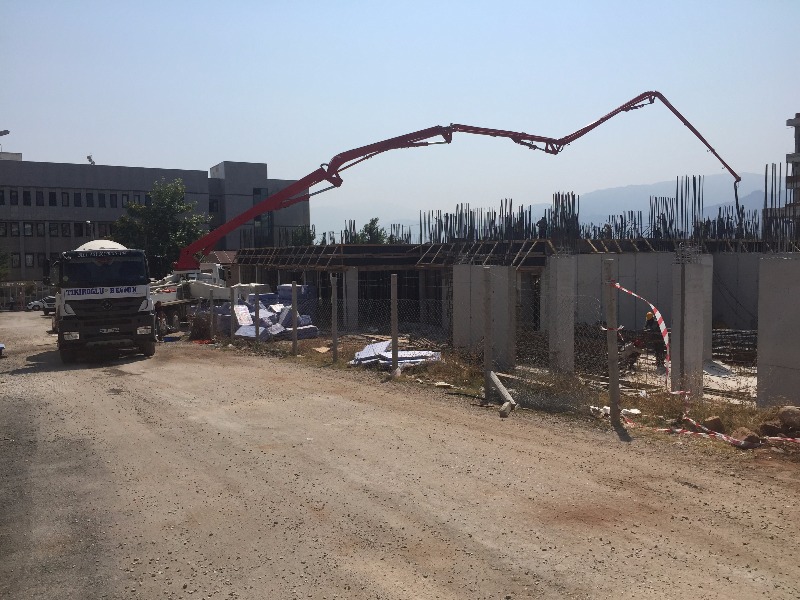
Concrete should be poured in horizontal layers. The thickness of each layer should be 15-30 cm. The layer thickness should be equal and homogeneous in each area. The layer thickness should be 30-45 cm in elements such as columns and curtains. These thicknesses may increase in other mass concretes such as dams. Concrete should always be poured in the middle of the molds. Concrete that hits the sides of the mold separates. Lower the pump hose to the mold base as much as possible. This prevents the concrete from separating. Fresh concrete should not be dropped freely from high distances. Drop fresh concrete from a height of no more than 80 cm.
Concrete should always be poured vertically and perpendicularly into the mold. The placement of concrete is started from the corners of the molds. Drizzling rain is suitable for concrete pouring. Avoid pouring concrete in heavy rain. Concrete pouring should be uninterrupted and continuous. Cold joints should not be allowed.
CASTING CONCRETE IN COLD WEATHER CONDITIONS
TS 1248
The weather condition during which the average air temperature is below +5 oC for three consecutive days is defined as “cold weather”.
Effects of Cold Weather Conditions on Concrete Properties
The setting time of fresh concrete in cold weather conditions is longer than the setting time of concrete under normal temperature conditions, and the rate of gaining strength is slower. In the early stages (before the concrete has set or has not yet gained sufficient strength), freezing of the water in the concrete even once greatly reduces the strength and durability of the concrete. In the event of a large difference between the temperature of the placed concrete and the ambient temperature, stresses occur in the concrete and cause cracks.
Effect of Initial Freezing on Concrete Properties
The freezing of water in the concrete before the concrete sets, As a result of the freezing of water in the concrete that has hardened after setting but has not gained sufficient strength, internal cracks occur, and permeable and porous low-strength concrete is obtained.
At -5 oC, 92% of the concrete mixture water freezes,
It is accepted that concrete does not gain strength at temperatures lower than -12 oC,
The volume of frozen water expands by 9%,
The relevant Turkish Standard accepts that concrete will not be damaged by frost after its compressive strength reaches 50 kg/cm2.